NYC With Kids: How to Travel Light Without Sacrificing Comfort
A practical guide for parents traveling to New York City with babies or toddlers who want to pack less, avoid extra baggage, and still keep their child comfortable.
By Homey Staff
Packing for NYC with kids can feel overwhelming — especially when you’re trying to travel light without giving up the comforts your child relies on at home. Parents traveling to New York City with babies or toddlers often struggle to balance packing light with maintaining routines, comfort, and sleep.
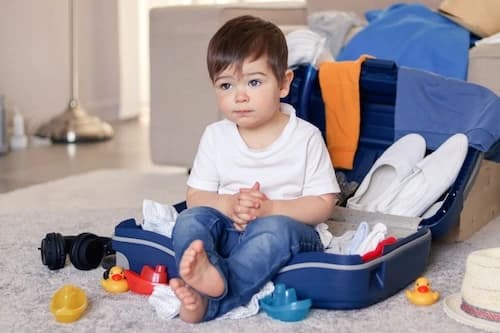
At home, much of parenting happens quietly in the background. Sleep schedules, feeding routines, playtime, and even environmental factors like noise and airflow are supported by a space that’s been intentionally built around a child’s needs. When families travel, that environment disappears instantly — and children are expected to adapt overnight.
For adults, traveling to New York City can feel energizing and exciting. For children, especially infants and toddlers, it can feel disorienting and overwhelming.
Why traveling with a baby or toddler feels so disruptive
If you’ve ever noticed your child sleeping lighter or taking shorter naps in a hotel, you’re not imagining it — unfamiliar environments can measurably change sleep. In sleep science, there’s even a well-documented “first-night effect,” where people sleep worse in a new place, especially on night one, as the brain stays more vigilant in unfamiliar surroundings1 2.
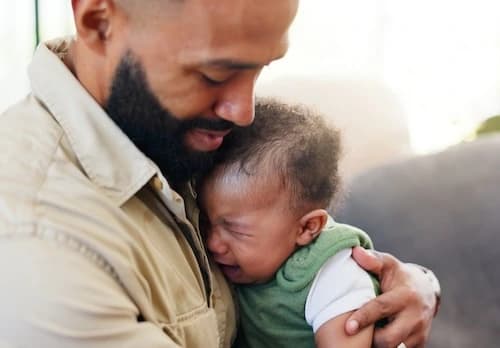
Now layer that onto what babies and toddlers actually need to feel regulated: predictable cues, consistent routines, and familiar “anchors” for sleep and mealtimes. Research on bedtime routines (including studies in infants and toddlers) has found that consistent routines are associated with better sleep outcomes — like fewer night awakenings and longer nighttime sleep3. When you travel, those routines get challenged all at once: the room looks different, the sounds are different, naps happen on the go, and bedtime happens in a space your child doesn’t recognize.
That amount of change in a short period is difficult for anyone. For infants and toddlers — whose sense of safety is tightly tied to familiarity — it can show up as fussiness, disrupted sleep, and emotional overload.
Why packing for travel with kids gets hard fast
Most parents immediately recognize what’s missing and think: We’ll just pack it. But that solution turns unrealistic quickly.
At home, infants may sleep on a firm, flat surface in a safety-approved crib or play yard — which the American Academy of Pediatrics emphasizes as part of safe sleep recommendations4. Many babies also rely on soothing cues that help them settle (like consistent sound). One classic neonatal study found that white noise helped many newborns fall asleep faster5. Feeding routines often depend on small tools that make life easier (warming bottles consistently, keeping bottles sanitary). Toddlers eat best with predictable structure — like a real seat at the table, not balancing on a bed while you negotiate bites.
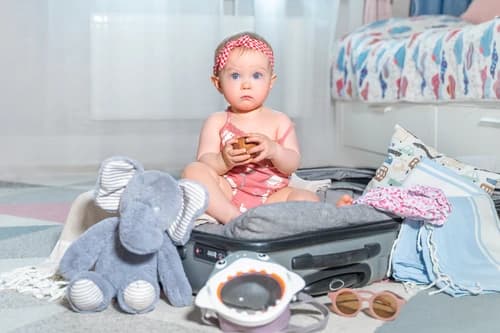
The problem is: the most helpful items are often the least packable. A full-size crib doesn’t fit in a suitcase. A play yard is awkward and bulky. Even “small” comforts add up when you’re already packing clothes, diapers, wipes, and your own essentials.
So most families compromise: bring what you can, do without the rest, and hope your child adjusts quickly.
The hidden cost of traveling with a baby: baggage fees, bulk, and breakage risk
The cost isn’t just stress — it can be literal. Checked bag fees can add up quickly, especially when kid gear pushes you from “one suitcase” into “two bags plus extras.”
Here are a few examples that illustrate how fast it stacks:
Domestic examples (U.S.): Delta lists common domestic checked bag fees for Delta Main / Comfort travelers as $35 each way for the first checked bag and $45 each way for the second6a. JetBlue’s published baggage info (pricing varies by fare and timing) similarly shows paid checked bag fees that rise for additional bags6b.
International examples: Etihad publishes extra baggage pricing by region and also lists a clear example for flights to/from the U.S. and Canada: $140 per bag (up to 23kg) purchased online, versus $200 per bag at the airport6c. Air France sells an “Additional Baggage option,” and notes that pricing depends on itinerary — with discounted pricing when purchased at least 24 hours before departure (with some route-based exceptions)6d.
And that’s before you factor in the non-money costs: extra time at check-in, more to haul through terminals, and more opportunities for something to get damaged. On the policy side, the U.S. Department of Transportation explains that airlines are responsible for repairing or reimbursing passengers for damaged baggage when the damage occurs while the bag is under the airline’s control (subject to liability limits)7— but anyone who’s traveled with a child knows that filing claims and gathering evidence can be a massive headache.
Strollers are often the one essential parents insist on bringing — but even those come with friction. They’re folded, gate-checked, handled by multiple people, and can come back late (or in rough shape). Navigating busy terminals while carrying a child, bags, and a folded stroller can feel like an obstacle course.
Once you arrive, practicality matters even more. In New York City — where you’re navigating busy sidewalks, tight elevators, taxis, and public transit — many families traveling with a toddler intentionally choose a compact stroller or lightweight stroller that’s easier to maneuver. But even if you choose a smaller stroller, flying with it still adds steps and stress.
What happens when parents go without
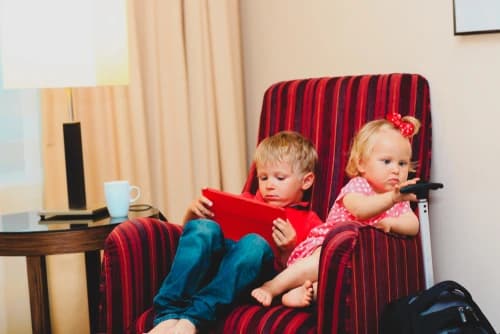
When families leave familiar items behind, children feel it fast:
Sleep becomes lighter and more fragmented — especially in a new space where the first-night effect can make rest harder1 2. Feeding becomes rushed or improvised. Playtime becomes limited to “whatever space is clean,” which can be hard in a small hotel room. Infants may struggle to settle without familiar cues. Toddlers may act out — not because they’re “being bad,” but because the environment no longer supports them.
Many parents accept this as “just part of traveling with kids.” But often, it’s the absence of familiar tools and routines — the same routines associated with better sleep in research — that makes travel feel like survival mode3.
A smarter way to travel with a child in NYC
This is where Homey Rentals plays a supporting role.
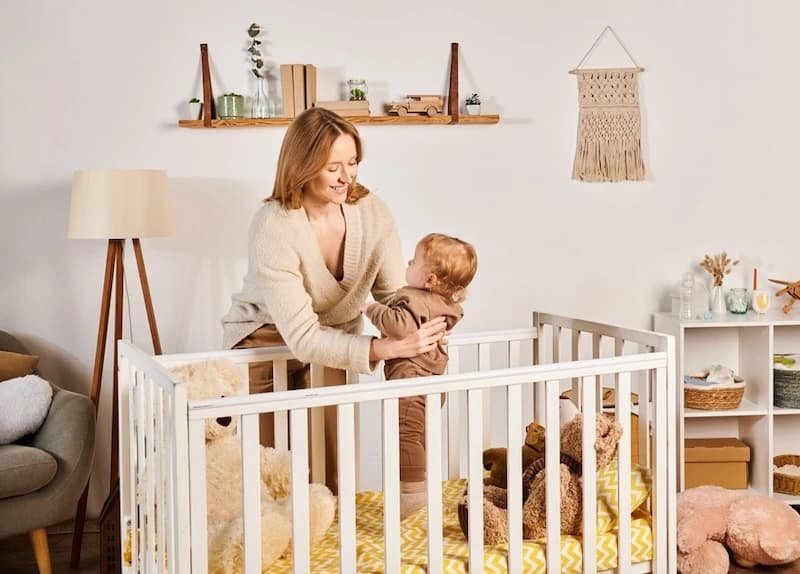
Instead of forcing parents to choose between overpacking or doing without, Homey Rentals lets families reserve childcare and comfort essentials ahead of time and have them delivered directly to their hotel. Your child’s essentials can be ready before you arrive — so you can pack lighter without stripping away the routines that help your child feel comfortable.
In other words: you still travel. You just don’t have to start from zero.
Traveling with a baby: recreate comfort away from home
For infants, sleep setup matters — and safe sleep guidance emphasizes a firm, flat sleep surface in a safety-approved crib, bassinet, or play yard4. That’s why many parents feel immediate relief walking into a space with a real crib or playard set up.
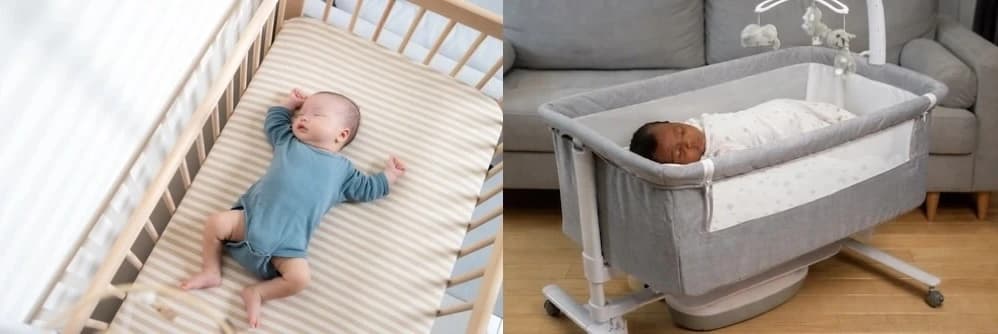
With Homey Rentals, families can reserve familiar sleep options like a Full Size Crib or a Nursery Center Portable Playard with Bassinet so bedtime and where the child will sleep doesn’t become a “figure it out later” moment. Its already the same familiar options that they are used to.
If your baby is used to consistent sound at bedtime, that’s another travel pain point. The first night in a new place is often noisier than home — hallway sounds, elevators, street noise — and sleep in unfamiliar environments can be more easily disrupted1 2. Some parents use white noise as part of their settling routine, and research has found white noise can help some newborns fall asleep faster5. If that’s part of your routine, you can reserve a Mini White Noise Machine and keep your bedtime cues consistent.
During wake windows, babies still need safe, clean places for supervised floor time. A familiar play surface can help you keep routines like tummy time or playtime consistent, which matters even more when everything else is new. Homey offers options like Space Friends Baby Play Mat for a clean, contained play area in your room.
And for soothing? Many families rely on motion at home. While safe sleep guidance cautions against letting babies routinely sleep in sitting devices (and emphasizes moving a sleeping infant to a firm sleep surface when possible)4, soothing motion can still be part of how you calm your baby before transferring them to a safe sleep space. If motion is part of your “wind down,” reserving a Baby Swing with Bluetooth can help recreate that calming rhythm away from home.
Feeding routines are another “you don’t realize how much you use it until it’s gone” category. Bottle prep is harder without the tools you’re used to. If you normally use a warmer or a sterilizer at home, those are exactly the kinds of items most parents never pack — yet often miss immediately once they arrive. Homey offers items like Beaba Multi Milk Baby Bottle & Jar Warmer and 2-In-1 Baby Bottle Sterilizer so feeding can stay efficient and sanitary without stuffing your suitcase.
Finally, don’t underestimate the environment. Indoor humidity can affect comfort, especially for kids with allergies or sensitivities. Boston Children’s Hospital notes that “good humidity” is typically in the 35–50% range8. If NYC winter heat or dry hotel air tends to bother your child, you can reserve a Levoit Humidifier Top Load and make the room feel more like home.
Traveling with a toddler in NYC: structure matters
Toddlers are a different kind of travel equation. They’re more mobile, more opinionated, and more likely to react to disruption with big feelings. That’s why structure helps: predictable routines and clear “containers” (for meals, play, and movement) can make the whole day smoother.
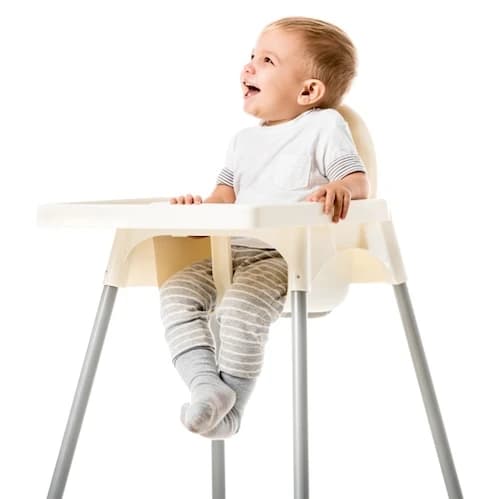
Mealtimes are a perfect example. At home, toddlers eat in a predictable way — same chair, same posture, same rhythm. On the road, meals can become chaotic fast. Reserving a Foldable High Chair turns meals back into a familiar moment instead of a juggling act on a hotel bed.
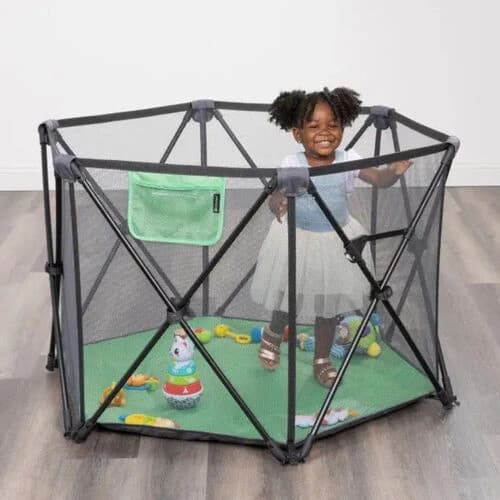
For play, toddlers do best when there’s a safe “yes space” — somewhere they can move, explore, and play without you constantly redirecting them away from hazards. A small hotel room or NYC apartment rental doesn’t always give you that. Reserving a Play Zone Pop-Up Play Pen can give you a contained play area so you can breathe for a second (and so your toddler can actually play).
And then there’s getting around the city. NYC is a walking city — and with a toddler, you’ll likely do a lot of it. Many families traveling to New York City opt for a compact or lightweight stroller that’s easier to maneuver on busy sidewalks, in narrow store aisles, and through subway turnstiles. Instead of flying with one, families can reserve a Compact Stroller or Lightweight Stroller locally — and skip the airport hassle while still having something practical for NYC streets.
Not sure which stroller works best for NYC? Our guide to the best stroller for NYC breaks down the differences between lightweight, compact, and full-size options based on your itinerary and your child's age.
Environmental comfort matters for toddlers too, especially for light sleepers. If air quality or dryness tends to affect your child, Homey also offers options like BlueAir Mini Max Air Purifier and Levoit Humidifier Top Load to help keep the room comfortable.
The items parents rarely pack — but always wish they had
If you ask parents what they wish they had on a trip, the answers are surprisingly consistent — and usually involve items that are too bulky, too awkward, or too “extra” to justify in a suitcase.
It’s the big stuff: a proper Full Size Crib instead of hoping the hotel’s option is available (or comfortable). It’s the routine stuff: a Mini White Noise Machine for consistency in a new place (especially when first-night sleep can be more fragmented)1 2. It’s the “quality of life” stuff: a bottle warmer or sterilizer that makes feeding feel normal again, instead of a nightly improvisation.
These aren’t luxury add-ons. They’re extensions of everyday care — the tools that help routines run smoothly at home, and the same kinds of routines that research links with better sleep outcomes in young children3.
Less stress, more enjoyment when traveling with kids
When children are comfortable, parents feel it immediately.
Sleep improves. Meals are calmer. Transitions are smoother. You spend less time troubleshooting and more time enjoying the trip you planned — whether that’s Central Park, museums, playground hopping, or simply walking the city with a coffee in hand.
Homey Rentals bridges the gap between home and travel by making it possible to recreate the most important parts of a child’s environment — without the burden (and added cost) of packing more. And when airline fees can climb from “one bag” to “multiple bags plus extras” quickly — as shown in Delta’s published checked bag fees and in international extra-baggage pricing examples like Etihad’s6— the value of traveling lighter becomes real, not just aspirational.
Travel doesn’t have to mean starting from zero
Traveling to NYC with kids will always require planning. But it doesn’t have to mean sacrificing comfort, routine, or peace of mind.
Children don’t need perfection — they need familiarity, support, and consistency. And when those needs are met (even temporarily), travel becomes less about survival and more about shared experience.
Packing for NYC with kids doesn’t have to mean carrying everything with you. Homey Rentals makes sure the comfort of home is already there.
See the Childcare Essentials That Can Make Your NYC Stay More Comfortable
References
- Tamaki M, et al. Night Watch in One Brain Hemisphere during Sleep Associated with the First-Night Effect in Humans (Current Biology, 2016). https://www.cell.com/current-biology/fulltext/S0960-9822%2816%2930174-9
- Wick AZ, et al. The first-night effect of sleep occurs over nonconsecutive nights in unfamiliar and familiar environments (2024, PMC full text). https://pmc.ncbi.nlm.nih.gov/articles/PMC11467056/
- Covington LB, et al. Toddler Bedtime Routines and Associations With Nighttime Sleep (Journal of Clinical Sleep Medicine, 2019). https://jcsm.aasm.org/doi/10.5664/jcsm.7838
- Moon RY, et al. Sleep-Related Infant Deaths: Updated 2022 Recommendations for Reducing Infant Deaths in the Sleep Environment (Pediatrics, 2022). https://publications.aap.org/pediatrics/article/150/1/e2022057990/188304/Sleep-Related-Infant-Deaths-Updated-2022
- Spencer JAD, Moran DJ, Lee A, Talbert D. White noise and sleep induction (Archives of Disease in Childhood, 1990). (PubMed record) https://pubmed.ncbi.nlm.nih.gov/20749893/
- International and US Domestic Baggage Fee Information by Carrier:
- U.S. Department of Transportation: Lost, Delayed, or Damaged Baggage https://www.transportation.gov/lost-delayed-or-damaged-baggage
- Boston Children’s Hospital — Pediatric Environmental Health Center. HHOMES: Humidity https://www.childrenshospital.org/services/pediatric-environmental-health-center/hhomes/humidity